
The common principle
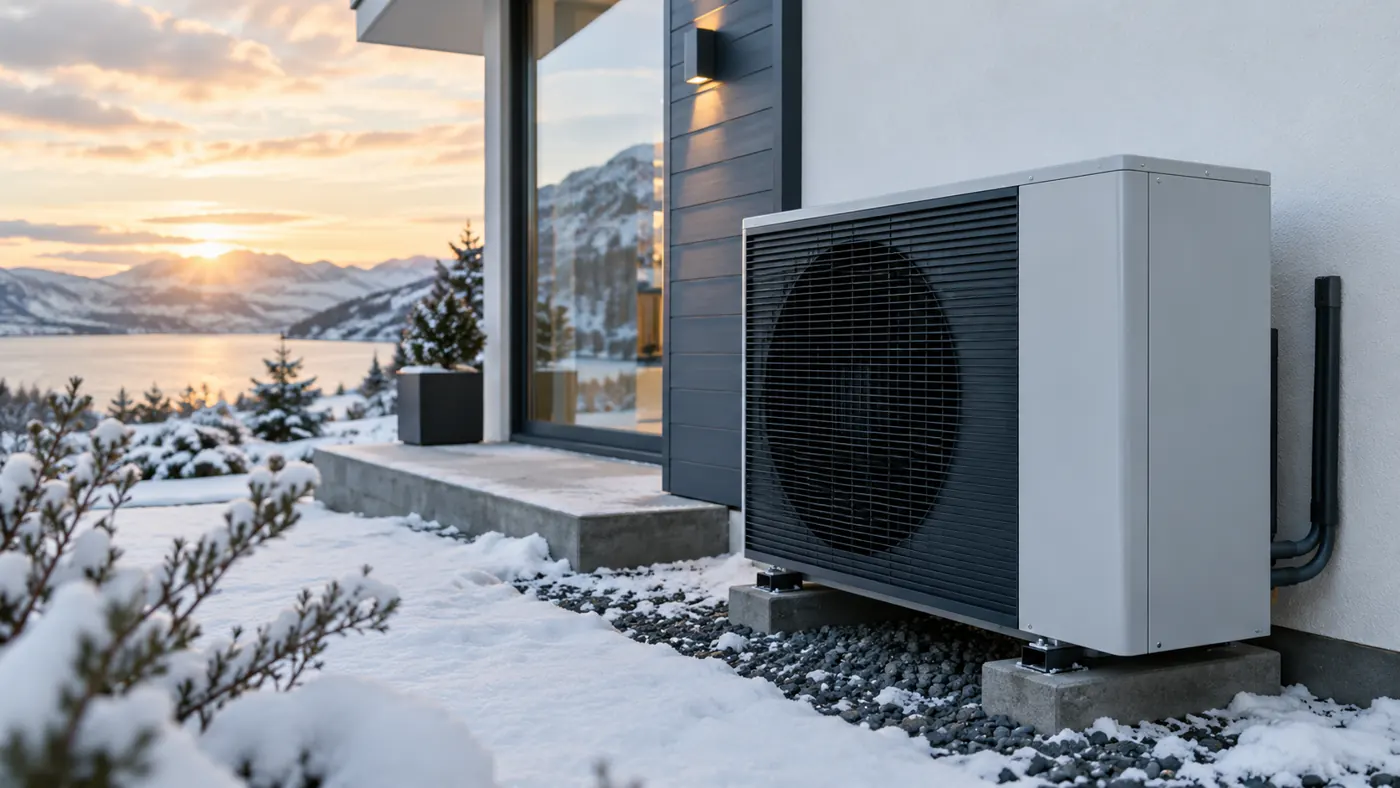
An air-source heat pump uses a refrigeration cycle to move heat between outdoor air and the occupied space. In cooling mode the direction reverses. A ground-source system exchanges heat with the ground instead. The available heating output, efficiency and installation requirements vary by model and conditions.
Ducted air-to-air
A ducted heat pump connects to an air handler and a distribution network. Existing ducts may make it attractive for a whole-home replacement, but poorly sealed or undersized ducts can undermine performance. Compare the outdoor unit and indoor air handler as a matched system.
Ductless and multi-zone
A ductless system connects an outdoor unit to indoor heads without conventional whole-house ducts. It works well for an addition or room-by-room control. Multi-zone designs need more careful evaluation because a shared outdoor unit serves several rooms with changing loads.
Air-to-water and ground-source
Air-to-water equipment delivers heated water to compatible emitters, and ground-source systems use buried loops. Both demand a project-specific design. Product pages should distinguish a complete system from an outdoor unit alone.
What to compare
Ask for heating capacity at local winter design conditions, cooling capacity, electrical requirements, compatible indoor components, warranty conditions and installation scope. The cheapest outdoor unit is rarely the whole project.
Sources and further reading
- US Department of Energy: Heat Pump Systems
- US Department of Energy: Central Air Conditioners and Heat Pumps
Explore related collections
Heat pumps
Move heat between indoors and outdoors to heat and cool a building. Air-source systems can serve existing ducts or a ductless indoor unit.
Explore collection ↗COOLINGDuctless mini-splits
Connect an outdoor unit to one or more indoor units for targeted cooling; heat-pump models also heat.
Explore collection ↗